Here is a summary of status of kits and PCB availability
email: mike@willegal.net if you have any questions
Here is a summary of status of kits and PCB availability
email: mike@willegal.net if you have any questions
Though I do make a small profit on some of the things I sell, in other cases profits are elusive. A typical example is the Datanetics keyboard PCB. Here is a timeline.
Spring, 2010: I started this project.
December, 2010: I had the first batch of 10 PCBs made.
October, 2011: I sold out the first batch of 10 – the project had cost me several hundred dollars, even after selling all the extra PCBs.
October, 2012: new run of 20 PCBs made
August, 2013: I finally have broken even, income from PCB sales have covered all the expenses I have incurred on this project
For those of you that are interested, I still have some PCBs available.
For those of you that have purchased the PCBs and are using Apple II keycaps, I plan on having a batch of custom Datanetics keycaps made sometime in the next 6 months or year. Hopefully there is enough interest from PCB owners that I will not have to wait 3 years to recoup my expenses from a custom keycap set. Let me, mike@willegal.net, know if you are are interested in this.
THis question came to mind when determining why shipping cost from all the way across the country was only $4.95, which seemed low.
I calculated this three different ways using the measurements of .1″ x 11″ X 12.75″ for the aluminum faceplate.
1) Use this online calculator http://www.onlinemetals.com/calculator.cfm result was 1.4 pounds per piece for a total of 28 pounds. Actual weight should be a little less, because of the holes in the pieces.
2) I looked up the mass of aluminum which is 2700 KG/M3. Then calculated the volume of 20 faceplates at 0.000226209 cubic meters. Multiplying the two results in 1.34 pounds per plate times 20 plates equals 27.87 pounds. Actual weight should be a little less, because of the holes in the pieces.
3) Then I realized I should have just looked it up in the tracking information. Sure enough the weight of the package is 26.1 pounds, which is about what the calculations minus the holes showed it should be.
I still don’t know exactly how the shipping was so low, but I’ll take it, knowing I have over 25 pounds of faceplates on the way.
Oh my, what I have I started. Apple 1 registry maintenance has become far more effort than I expected. They keep popping out of the woodwork, sometimes in waves. Others are changing hands, at a steady rate. In the last year, quite a surprising number have been brought up into operating condition.
In an attempt to make it easier for me to maintain this data, I have made a significant update. A table of all 61 units that I have listed in the registry has been added, with some major characteristics listed and links to individual units descriptions. Detailed descriptions are now organized into three catagories.
I also added a number of newly uncovered Apple 1s, including one in the National Museum in Scotland and one possibly owned by the first female graduate of Stanford Law School.
The curators of the Nixdorf Computer Museum in Germany were nice enough to send me pictures of their unit. I always appreciate receiving quality images of original Apple 1 computers. The table indicates what kind of images that I presently possess, so if you have quality images of units, that you think may improve my image library, let me know.
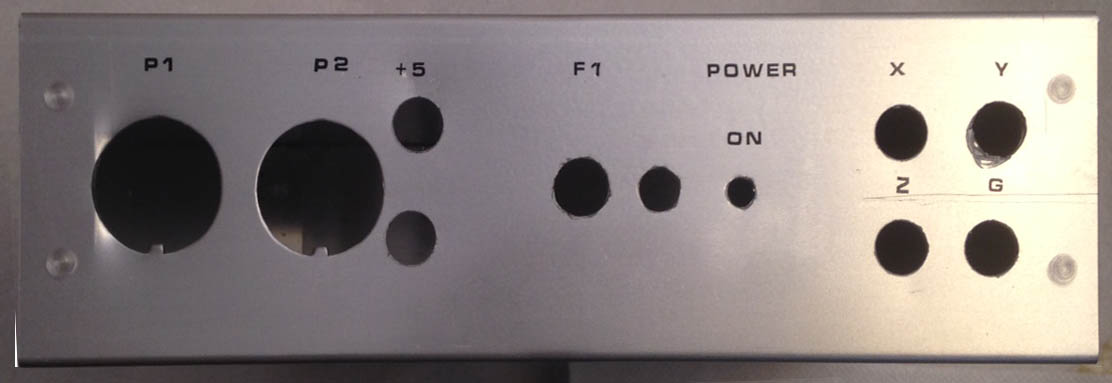
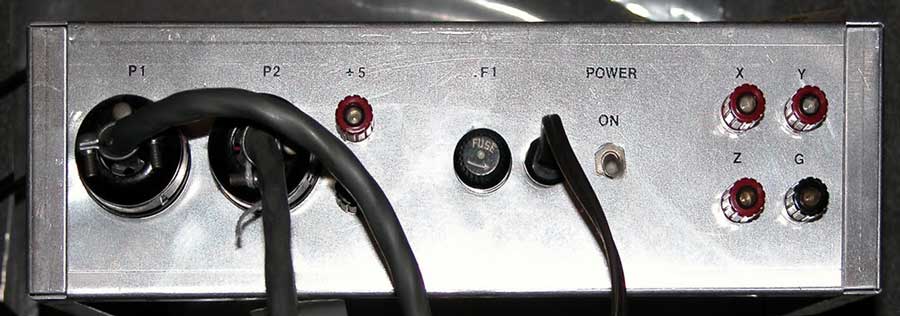
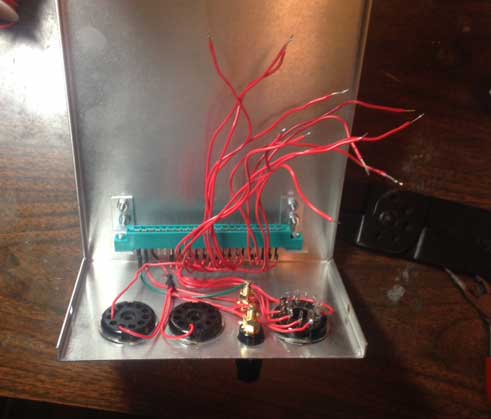
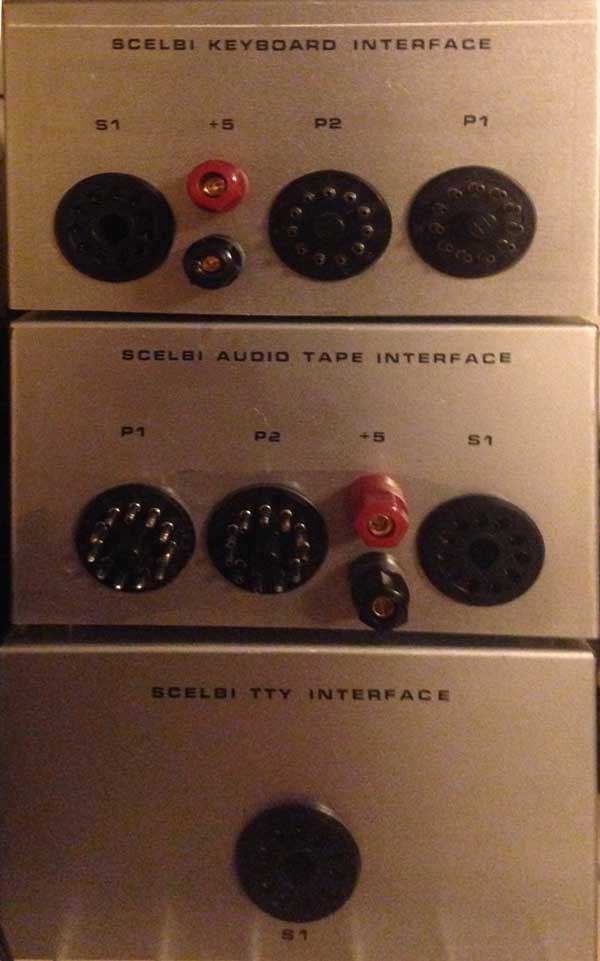
I just added the correct SCELBI power connector to my reproduction. Note that this was the factory setup. Back in the day, some people integrated power supplies right into the chassis, rather than using an external power supply. The plug is a 86CP4 and the socket is a 78S4. These days, they are kind of scarce. In this case, scarcity equates to price, as they are about 9 dollars each. Check inventory at alliedelec.com for 78S4 and at tedss.com for 86CP4.
Here are some images.
You put the plug in the chassis so the cable coming from the power supply doesn’t have exposed pins.
The SCELBI manual says put +5 on pin 1, ground on pins 2 & 3, and -9 on pin 4. SCELI assembly directions have you position 1 and 4 at the top of the chassis. This makes wiring to the backplane pretty clean. The slip rings that are used to hold these connectors onto the panel are a pain to get on – be patient and don’t expect the rings to seat perfectly. I chose to connect the I/O port grounds directly to the incoming ground wire, rather than wire back to the backplane. Now I’m thinking I should have run both ground wires to the backplane, rather than join them together and run 1 wire to the backplane. I used 18 gauge wire, so it probably doesn’t matter.
The socket and plugs are keyed, in that two of the pins (positions 1 and 4) are larger than the other two. However, I think if you weren’t paying attention, you could plug this in far enough to make contact and cause problems. Be careful when plugging this unit in.
I have used electrical tape to protect the exposed terminals on the cable coming from the power supply. I need to pick up some of the hoods that are designed to cover these connectors. SCLEBI used gray clad multi-conductor cabling back in the day. I think it is still available, but like many SCELBI components, it is pretty expensive.
This process took me a couple of hours. Take your time to get things right and avoid costly mistakes.
Next up – getting the TTY interface built up and checked out. Other than schematics, and parts placement, we don’t have documentation for that board, so it might take a while.
7/7 is the 40th Anniversary of Nat Wadsworth running the first program on the first SCELBI. Thanks to Mark Arnold for reminding me of this.
Regards,
Mike Willegal
happy 4th of July..
I think I have front panel controls working now
download the app with this link
Scelbi.zip
cheat – load scelbal and hit the run button to see blinking lights
Scelbal.hex
web page and some notes can be found here
http://www.willegal.net/scelbi/the8008andScelbi.html
Constructive feedback welcome.
regards,
Mike W.
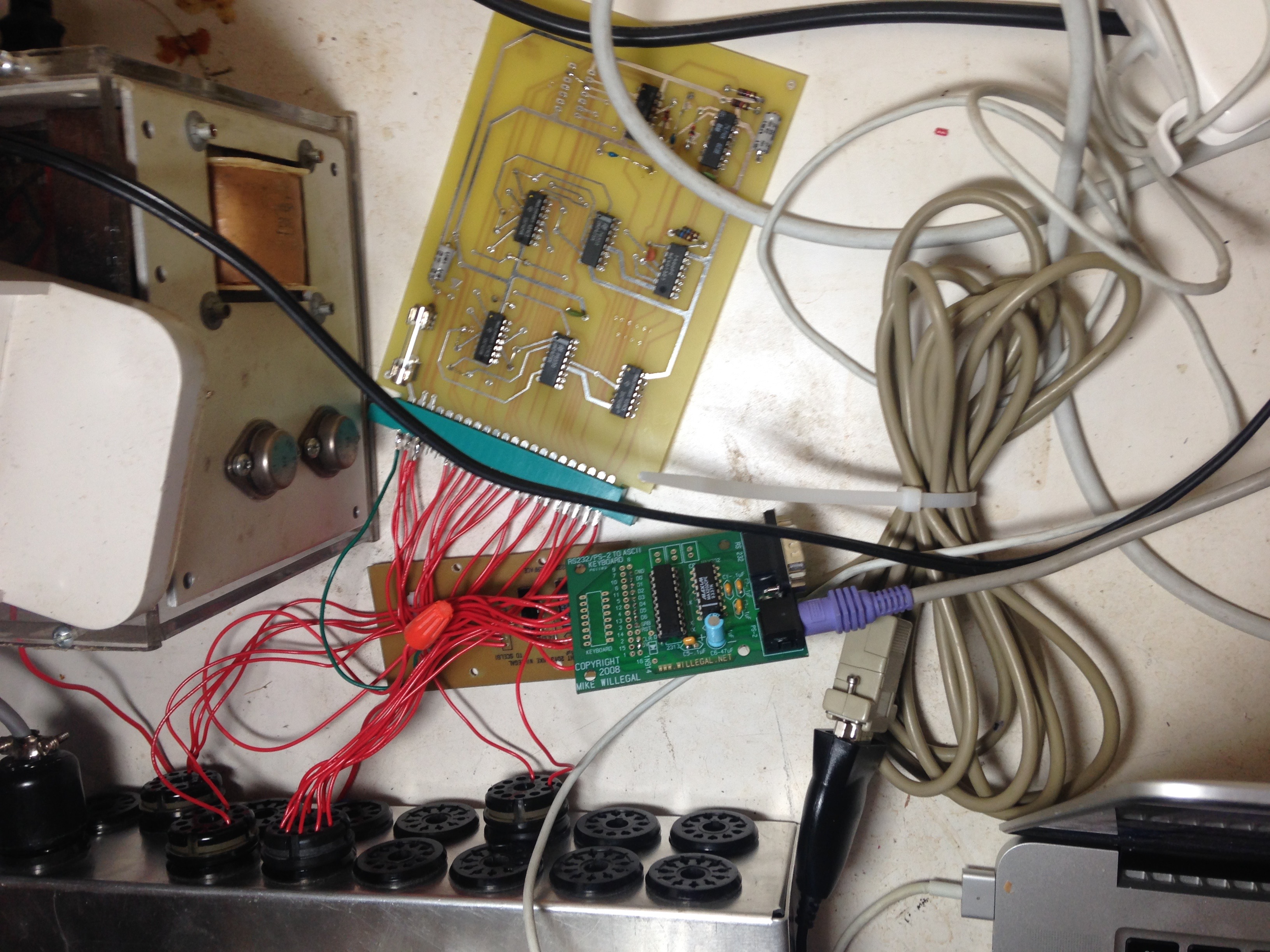
I now have SCELBI TTY cards in stock and will ship one to you for $30, shipping included. If you are interested send an email to: mike@willegal.net. Be aware that at this point they are not tested, so until I get one tested, I don’t guarantee that they will work without modification.
Regarding TTY card testing, I have been delayed because I didn’t have a current loop interface to test it against. Well that has been rectified, as I have the Apple II Serial Card that I mentioned in another post working (at least in RS232 mode). In order to get that card working in a way that would work for interfacing to the SCELBI TTY card, I had to reconstruct and burn a P9 PROM that matched the first version PROM. Wendell Sander was nice enough to send me a PROM that was a copy of his serial card P9 PROM. However, his P9 PROM was overwritten in a couple of spots with a all ones pattern. I took his PROM and compared the parts that were intact with the listing at the back of the manual and determined that I could resurrect his PROM by filling in the missing code with the code from the listing in the manual. After messing up my first attempt, I burned what I thought was a good P9 PROM. I put it in the Serial card and tested in RS232 mode against a Super Serial card in another Apple II. That simple test was successful and I now have a working Apple II Serial card without the undesirable flow control behaviors of the second version PROM.
I should be able to use this card in current loop mode for testing the SCELBI TTY card. In fact, I have visions of putting it in an APPPLE IIe (for the needed 72 column support) and emulating TTY operation as closely as I can with the Apple II. I should be able to emulate not only print and typing functions, but emulate paper tape as well. Potentially, I could even add a real paper tape reader and possibly punch by constucting an interface on a SUPERPROTO board.
As far as my prototype TTY card itself, it is mostly built up, just missing a couple of resistors which should arrive today or tomorrow. Once it’s together and tested I’ll put up a Bill of Materials, some simple build instructions and photos.
Check out this article in the San Jose Mercury News. I never thought that this would be the result when Ralph Simpson, a volunteer for the History San Jose museum contacted me for tips on bringing up their Apple 1. I put him in touch with Wendell Sander and Dan Kottke and the rest is “news”. Note that there were several Apple 1s present that are not in my registry. Probably an indication of how many are still out there in the wild, unaccounted for.
It also shows why I don’t count working Apple 1s anymore. Ever since it was determined that working 1s were far more valuable than non-working 1’s, everyone is fixing them up. In a way, this is great, as we originally noted that there weren’t many that were operating, anymore. We thought it was a bad thing that so many were not powered up and being used. My point of view has shifted a little bit, since there are quality reproductions out there, that can be operated instead, and the value of the originals has gone through the roof, maybe running those old machines doesn’t make as much sense, as it used to. That said, so far, I haven’t heard of one being damaged by power up, so why not run them and keep them working.
There is another small number that is interesting, though. There are not very many left in the hands of original owners. Original owner, Wendell Sander asked me this question, and I could only come up with a few, though I’m guessing that there are more out there in the “wild”, still in the hands of original owners. I’m not giving a count, but it definitely seems like a small number.
Also Bob Luther is launching a book on the Apple 1. His kickstarter is almost over, but it sounds like it will be available elsewhere, afterward. I was interviewed by one of Bob’s assistants a couple of years ago, so this book has been in the works for a while. It will be interesting to read what Bob has found out about the Apple 1.
I’m calling version .97, my beta version.
Update – this version has errors in the definition of the ROL and ROR instructions – replaced by http://www.willegal.net/blog/?p=6454