More Apple 1 Fonts

May 21st, 2013

In a previous post, I talked about how the lettering on the Apple 1 was probably done with a K&E Leroy system. However, I forgot to mention that the larger letters were not done with Leroy. Those letters were probably done with a Letraset or similar rub on transfer system. Take a close look at the Apple Computer 1 lettering, which is representative of the larger lettering seen throughout the board.

Apple1logo

Apple1logo

This lettering is in the general form of Helvetica, with subtle differences from most variations of Helvetica that you see today. Through extensive searching I found a very close match with Neue Haas Grotest Std Text 65 Medium. This is a recreated version of the predecessor to Helvetica. Check out this page with more information about this font.

Here is a recreation of the Apple Computer 1 lettering using this font. I think it would be hard to beat this match.

Replicated Apple Computer 1 logo

Replicated Apple Computer 1 logo


replicated Apple 1 copyright notice

replicated Apple 1 copyright notice

If someone has a Letraset catalog from the 70’s, it would be interesting to see if they can find a good match in one of those catalogs.

Visit to Kennesaw Mountain

May 19th, 2013

The day after VCF east, I visited a couple of Civil War sites north of Atlanta. I already reported on my visit to Allatoona Pass.

After hiking around Allatoona, I drove south to Kennesaw and did the hike to the top of Kennesaw Mountain, which took about an hour. Kennesaw Mountain rises about 800 feet above the surrounding countryside. The view from the top is impressive. You can see from Atlanta in the south to Allatoona in the North, a span of something like 50 miles. Except for a few isloated Mountains, the country is of a gently rolling nature, much like eastern Massachusetts. It is no wonder that the few mountains played such a key role in the Civil War Campaign for Atlanta. The holders of those hills, had huge advantages of observation and communication. Here is a picture I took from the top of Kennesaw, looking north.

Looking north from Kennesaw

Looking north from Kennesaw

The other thing I noticed while hiking Kennesaw is that the main Confederate trench lines were located near the top. Certainly part of the reason for this is that the energy of any attackers would be reduced by the climb up to reach them. Certainly, making a successful attack against this position would have been very difficult. However another the thing to keep in mind is that the mountain is only about a mile long, part of a six mile long defensive line. Eventually Sherman was able to flank this line, like the ones before it.

How are the Apple 1 and Wonder Woman Comics alike

May 11th, 2013

I recently received an email that indicated that the Apple 1 was most likely lettered with the Leroy lettering. That email has resulted in a lot of research and exploration of exactly what is Leroy lettering and was it really used for lettering the Apple 1 PCB.

First thing to figure out is what is the Leroy lettering system? It is a system to mechanically create lettering that was intended to generate legible lettering on a drafting table. Engineering documents, maps, architectural drawings and the like were the primary applications.

Here is an image of a K&E Leroy lettering set.

K&E Leroy Lettering Set

K&E Leroy Lettering Set

It’s easier to show how it works, than describe it. Here is an image of one set up to make a capital M. The scribe follows the letting in the ruler like jig and ink in the “pen” writes a pretty exact copy of that letter. There are a series of jigs for different sized letters. The scribe tool can be adjust to make the letters slanted in an italic type fashion.

Leroy Letterng Sytems Set Up

Leroy Letterng Sytems Set Up

So how do we determine whether this system was used to make the lettering for the Apple 1. The easiest way is to compare the lettering on an actual Apple 1 with an example we know was made with Leroy lettering System.

Apple1 Leroy Lettering

Apple1 Leroy Lettering compared to Apple 1

You can see that the newly created Leroy lettering (bottom) is nearly a perfect match to the Apple 1 (top), so I think that we can be pretty confident that the Apple 1 lettering was made with the Leroy or very similar lettering system.

My next question is whether the SCELBI front bezel was also lettered with the Leroy system.

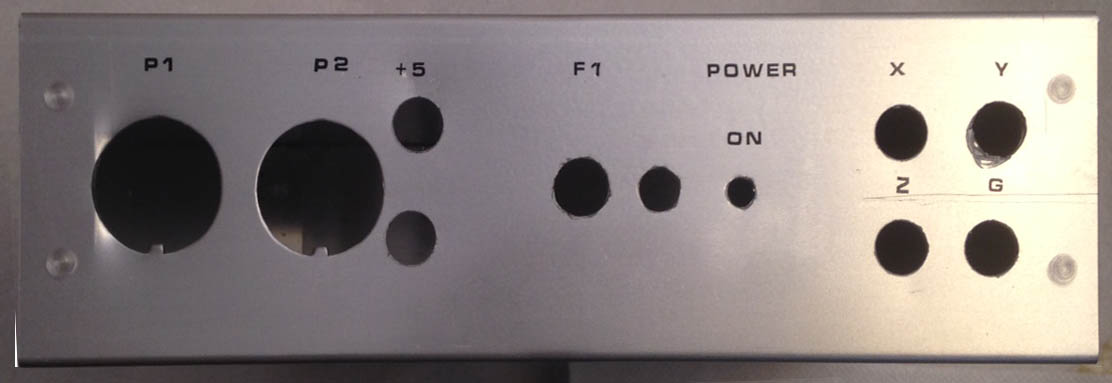
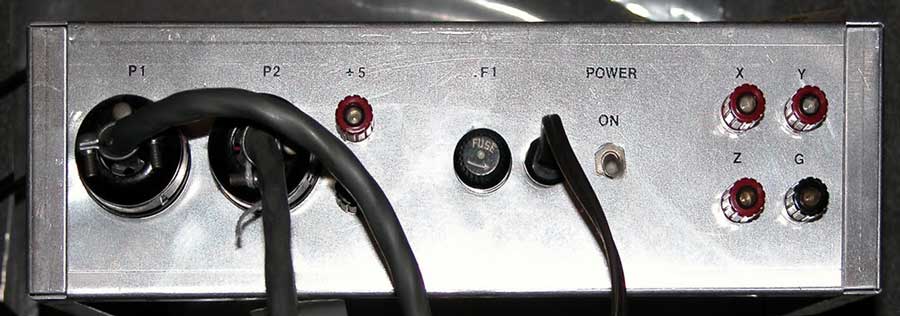
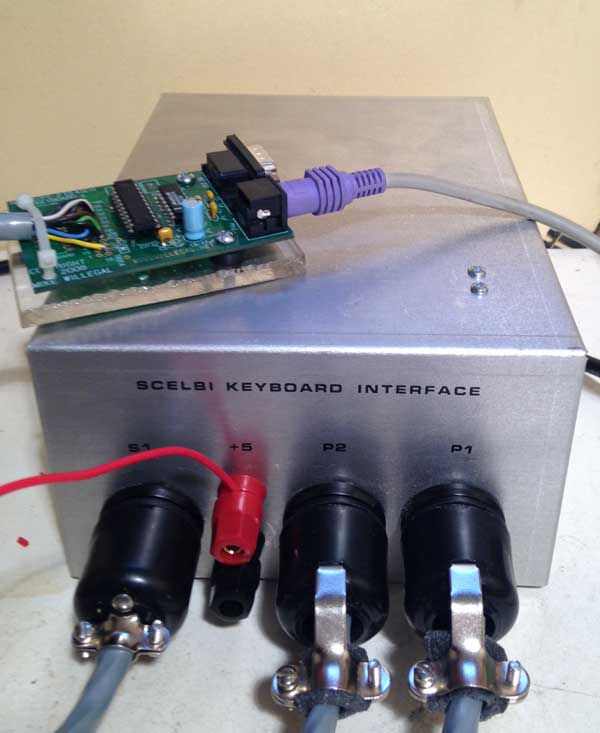
Leroy and SCELBI Front Panel

Leroy and SCELBI Front Panel

Though the lettering is very close, there are some differences in the leg on the “R” and the “A” looks a little different. Also the ends of the strokes on the letters have nice square edges, which would not occur in a Leroy lettered system.

Finally, follow this link to see what Wonder Woman comic books have in common with the Apple 1.

Battlefield at Allatoona Pass, Georga

May 10th, 2013

The day after Vintage Computer Festival Southeast, I spent some time north of Atlanta visiting some Battlefields. First I visited the Battlefield at Allatoona Pass. For numbers engaged, this is said to be the bloodiest battle of the Civil War. You can read a bit about the battle here.

The battlefield is now a very peaceful State Park. It is located about 20 miles north of Kennesaw about a mile or so off of I-75. Here is an image of the pass looking from North to South.

Allatoona Pass

Allatoona Pass

The next picture shows the initial position of the 12th Illinois, looking from the Confederate approaches. This position is a natural bastion and seems like it would be very difficult to attack. Indeed the attacks upon this position failed early on and were not pressed. The 12th Illinois later vacated this position and went to a more threatened position.

Position of 19th Indiana (at top of bluff)

Position of 19th Indiana (at top of bluff)

The most interesting thing I found about this battlefield is the state of preservation of the earthworks, most of which are extraordinary. I was a bit confused as to why the remaining defenses are mostly oriented to face an attack from the north. This is despite that fact that the Confederates surrounded this position and attacked from all sides. History say that there were south facing defenses, but none remain.

Later in day, I asked the ranger at Kennesaw Headquarters about this, and he thought for a minute and said that the reason is that these defenses were taken over from the Confederates, who had erected defenses here to stop Sherman from reaching Atlanta. However this doesn’t completely explain why the records indicate that there were south facing fortifications, that are now, nowhere to be seen. This is in direct contrast to the extraordinary condition of the north facing defenses.

I have been thinking about it off and on for a few weeks and have a possible explanation. The north facing defenses were probably constructed by the Confederates (probably slaves) and reused by the US troops. However, the US troops had to construct their own south facing defenses. Due to lack of time, energy and the likelihood that this position was only likely to be attacked by raiders, they constructed log breastworks from felled trees, instead of digging proper entrenchments. Those south facing wood breastworks constructed by US troops either rotted away or were burned as firewood by neighboring families and now leave little trace. Now this is pure conjecture, but it is the only way that I can rectify the historical record of an all around defense with remaining evidence.

There is one other thing that bothered me, when walking the ground. The trenches of the 4th Minnesota end at the sunken wagon road that passes across the hill. Between the 4th Minnesota and the 12th Illinois, was a gully that some Confederates used for cover when their attack failed. These Confederates were trapped in this gully and some 80 of them ended up surrendering at the close of the battle. However the trenches of the 4th Minnesota do not face this gully and the 12th Illinois left their positions to reinforce other positions after the Confederate attacks on them failed. So how did the 4th Minnesota maintain enough firepower to keep these Confederates pinned down in a gully that their trenches did not face. My conclusion, is that the left of the 4th Minnesota had to be refused and extended along the sunken wagon road, which directly overlooked the gully containing the trapped Confederates. Today, this sunken road is the perfect depth to act as an entrenchment. Another piece of pure conjecture, but it is the only possible explanation that makes sense to me.

Stay tuned, I’ll talk a bit about Kennesaw Mountain in a future post.

Great Grandfather Scharine’s Radio Interview

May 7th, 2013

Now for something completely different. Listen to a six minute radio interview of my Great Grandfather Charles Scharine, and his three sons, Herman, Walter and my Grandfather Albert Scharine. They operated Dairy Farms in southeastern Wisconsin through a good part of the 20th century. My mother thinks that this was recorded in the 1940s.

Great Grandfather Scharine’s Interview

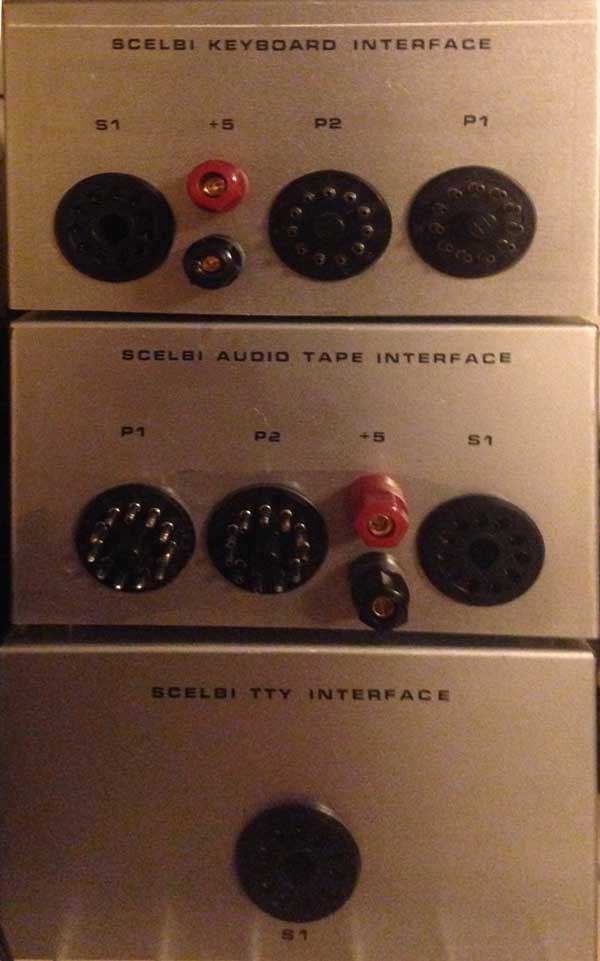
SCELBI TTY interface reproduction PCB – how much interest?

May 6th, 2013

I have the layout for a reproduction SCELBI TTY PCB close to complete. This is essentially a TTL to current loop interface originally designed for interfacing the SCELBI to a Teletype. The board is about 4.5″ x 3.5″ with a connector on a .156 spaced edge for plugging into to an edge connector with solder tail pins. This is very similar to a “Vector” prototyping board. Schematics and a drawing are available on Cam’s SCELBI website.

http://www.scelbi.com/documentation.html

Here is a photo of an original SCELBI TTY interface board.

SCELBI TTY interface

SCELBI TTY interface

I’m not sure how many to make. I’m projecting a bare PCB price at $30 to $40, depending upon interest level. Let me know if you have interest in this board.

regards,
Mike W.

MAC 128K intermittent operation resolved.

May 2nd, 2013

In this series of earlier posts and I had posted some notes on acquisition and repair of an all original MAC 128k. One thing I didn’t mention is that the video on the machine was a bit intermittent. This has bugged me a bit and yesterday, I decided to figure out what was going on. The symptoms were intermittent video, either working normally, or completely black. Taking the machine apart, I determined that wiggling or touching the connector that leads from the digital to analog board could cause the video to go on or off.

Some websites and an old book, “Macintosh Upgrade and Repair Secrets”, say that this sort of problem is often due to bad solder joints on the connectors on the analog board. Following those directions, I pealed off the plastic cover and resoldered the joints on the analog board. However, this did not affect operation. Figuring that I had nothing to lose, I then touched up the joints on the connector on the digital board. Wiggling this connecter seemed to affect the problem, so I was kind of hopeful that resoldering that connector would do the trick. Sure enough, the intermittent operation seems to have disappeared once I resoldered those joints. Now, I just need to find some foam with adhesive on both sides to use, to put the plastic panel back over the analog board and I think I’ll be back in business.

I hope I don’t have any further issues, at least for a while. By the way, my opinion is that those connectors could have used a bit more solder in the first place, and this probably contributed to the issues.

This experience with a MAC 128k shows how even a lightly used old computer that is in excellent cosmetic condition, may need some work in order to get it running like it was new. I had three problems with this machine that needed addressing.

  • two bad memory chips
  • floppy drive needed cleaning and lubrication
  • bad solder joint on motherboard connector
  • Note that there are high voltages in this system and it should only be operated by experienced technicians when the cover is removed.

    SCELBI Demonstrated at VCFse

    April 23rd, 2013

    I figured I would report on my SCELBI exhibit operations at VCF SE 1.0. I will also cross post this to the new yahoo group, retro-restore.

    Saturday was dedicated to running the SCELBI calculator program. Toggling in the bootloader before exhibit opening, went without major issues, though I found that focus on toggling was a little hard to keep with numerous other people around getting the facility ready and getting their exhibits ready. No significant problems with downloading and pretty soon I had the program running.

    I had left the divide by zero error handler to just halt the CPU. This turned out to be a good way to demonstrate front panel operations, as I just needed to divide by zero in order to halt the cpu. I would then need to toggle in a jump instruction in order to get the program running again. I did have a few issues during the day when the program appeared to stop accepting input. I think the main reason for this, is that the parser is rather particular, expecting only certain characters during input at any given time. Other characters are ignored, making it seem like the program or machine is stuck, when, in fact, the operator is typing the wrong thing. Anyway, the program ran all day, without any need to reload it, until I took it down to demonstrate during my talk.

    The second day, I was planning on demonstrating Mark Arnold’s 1K Mandelbrot program. I arrived just 20 minutes before exhibit opening and because I was also demonstrating a Mimeo and had to set that up, and didn’t have time to toggle in the bootloader before opening. I had to do it, while showing off my exhibit. The Mandlebrot program needs to use location zero, so I had to relocate the bootloader. Last time, I did this, I had no issues, but this time my math skills failed me and I spent a considerable amount of time trying to make the Mandlebrot program load right on top of the bootloader. Finally after realizing the error of my ways, I retoggled the bootloader into a better spot and got the Mandlebrot program loaded and running.
    If I had been thinking straight, I could have loaded the bootloader into the new location, with the bootloader that was loaded in the wrong place. The SCELBIgenerated Mandlebrot images for the rest of the day, without error.

    The bottom line is that the SCELBI ran all weekend, the clock remained stable enough to support RS232 bit-banged I/O without error. The power supply worked great.

    A lot of people that had never heard of it, were exposed to the SCELBI for the first time. And finally, I overheard one person say that the reproduction SCELBI was the coolest thing at the show.

    Things I would change. I would probably run the Mandlebrot on Saturday, when things were busiest. I also need to find a teletype or current loop terminal,because some people were confused by the Powerbook running a terminal program acting as the terminal.

    It was wonderful meeting everyone who came to the show and if you didn’t come I recommend you make an effort to attend a VCF, if you get a chance.

    Tragedy in Boston

    April 16th, 2013

    Too close to home. Yesterdays event occurred in a place I know fairly well and at an event that is a unique part of the culture around here.

    I hope that the survivors physically heal quickly and find a way to emotionally come to terms with their horrible experience, sooner, rather than later.

    SCELBI Clock – Component Changes for Better Stability

    April 14th, 2013

    As I noted in a previous post, clock stability on my reproduction SCELBI was pretty bad. The system clock slowed down 10 or 15 percent as the system warmed up. This would have played havoc with my bit banged serial communications, but by the time I was able to toggle in the loader, it would be warmed up and fairly stable.

    SCELBI cpu clocks

    SCELBI cpu clocks

    The timing circuit is made up of 4 interconnected 74121s one shots that control rising and falling edges of 2 interleaved clocks. The timing of each 74121 is controlled by a 5K trimmer resistor and a 300 pF cap. Figuring that the cap was part of the problem, I looked for some NP0 300 pf caps to replace the ones that i was using.

    What I found was a modern 330 pF cap, Kemet part # C322C331J2G5TA. While I was at it, I decided to replace the 5K trimmers that I had been using since first bringing up the SCELBI. The original trimmers I bought had the wrong foot print and turned out to be a little jumpy while adjusting. I replaced them with Bournes # 3006P-1-502LF.

    Though I don’t know which change made the difference, several trials have shown the new trimmers and NP0 caps seem to have stabilized the clock to the point, where I think I can forget about the “problem”.

    The only thing I might do at some point, is try to find some old style NP0 caps to replace the obviously modern Kemet ones.