PS/2 keyboard adapter used with Ohio Scientific Computers at VCF

April 10th, 2014

It took a modification, but Bill Dromgoole was using my PS/2 to parallel keyboard adapter in his display of OSI computers at VCF east 9.1. (The link to the image of Bill’s setup from the Vintage Volts blog). The modification was to stretch the strobe output with a 74123 one shot IC.

kb_adaptor
PS/2 to parallel keyboard adapter

I didn’t anticipate this when I made the design, but some vintage computers poll the strobe directly with software routines, while waiting for new input. My design assumed that strobe would be used to latch a flip flop (or equivalent), which would be reset by software when it actually read the character. I’m not sure how long Bill stretched the strobe, but with an 74123, it’s easy to adjust the pulse. Another person, told me at VCF that did the same thing to make the adapter to work with his vintage system. Unfortunately, I can’t remember who the second person was.

At some point, I’ll probably look into stretching the pulse in firmware, or at least adding a configuration option to stretch the pulse.

Problems with 8008 serial routines that posted

March 22nd, 2014

Just a heads up – the serial transmit routines that I have posted with the 8008 applications have serious issues. Though it was working for me, other were using serial ports that weren’t so forgiving and had problems with transmit. Finally Corey Cohen tracked down problems with start and stops bits used with the transmited data. As soon as I get a chance to check out the fixed routines, I’ll be updating all the applications on my 8008 application and BASIC pages. For those of you that can’t wait here is the code for a version that I think will probably work. This version is timed for 2400 baud.

My OS/X emulator was also broken and needs an update, as well.

OUTCHAR:

NDI 177 ; mask MSbit
CAL BITOUT ; STARTBIT
CAL BITOUT ; LSB
CAL BITOUT ; 1
CAL BITOUT ; 2
CAL BITOUT ; 3
CAL BITOUT ; 4
CAL BITOUT ; 5
CAL BITOUT ; 6
CAL BITOUT ; MSB
LDA ; timing delay
LAI 200
OUT OUTPORT ; stop bit
LDI 100 ; and extra for inter character spacing
JMP MORE2

BITOUT:
OUT OUTPORT
RRC ; shift to get next bit
LDI 3
MORE2:
LAA ; nop to delay 5 states to make timing work
DCD
JFZ MORE2
LDI 0 ; delay 8 states
RET

Reproduction SWYFT CARDs Arrived

March 14th, 2014

I just got my reproduction SWYFT CARDs in and they look and work great.

Reproduction SWYFT CARD

Reproduction SWYFT CARD

I’ll be releasing them at VCF east in a few weeks. I’ll also be doing a soldering workshop in which you will be able to build one, even if you are a novice at soldering.

Reproduction and Original SWYFT CARDs

Reproduction and Original SWYFT CARDs

The SWYFT CARD was used as a prototype/proof of principal implementation by Jeff Raskin’s company, after he left Apple after the falling out with Steve Jobs. Later they came out with the SWYFT Computer and the Canon Cat.

Check out the VCF website for details on VCF east 9.1
http://www.vintage.org

regards,
Mike W.

Old Barndoor Telescope Sky Tracker

March 5th, 2014

Barndoor Tracker Movie (click on this link to see movie)

I recently pulled this old 2006 project out of mothballs and it still works. You mount a small camera or telescope on it. You point the axis at the celestial north. Turn it on and it follows the rotation of the earth, so you can take long exposure pictures of the night sky. I only took one roll of film using it and before I was able to take a good look at the results, the negatives disappeared, so I don’t really know how good it worked.

It features speed, direction controls and a clock for timing the exposure.

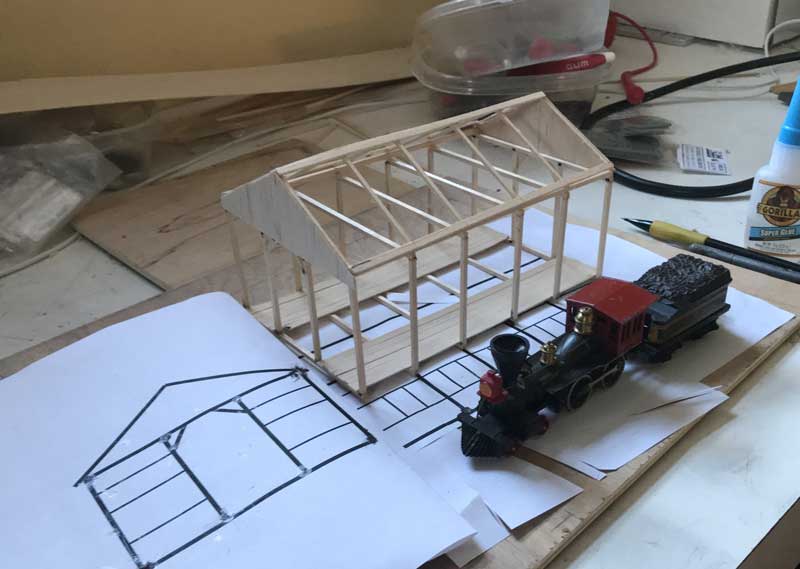
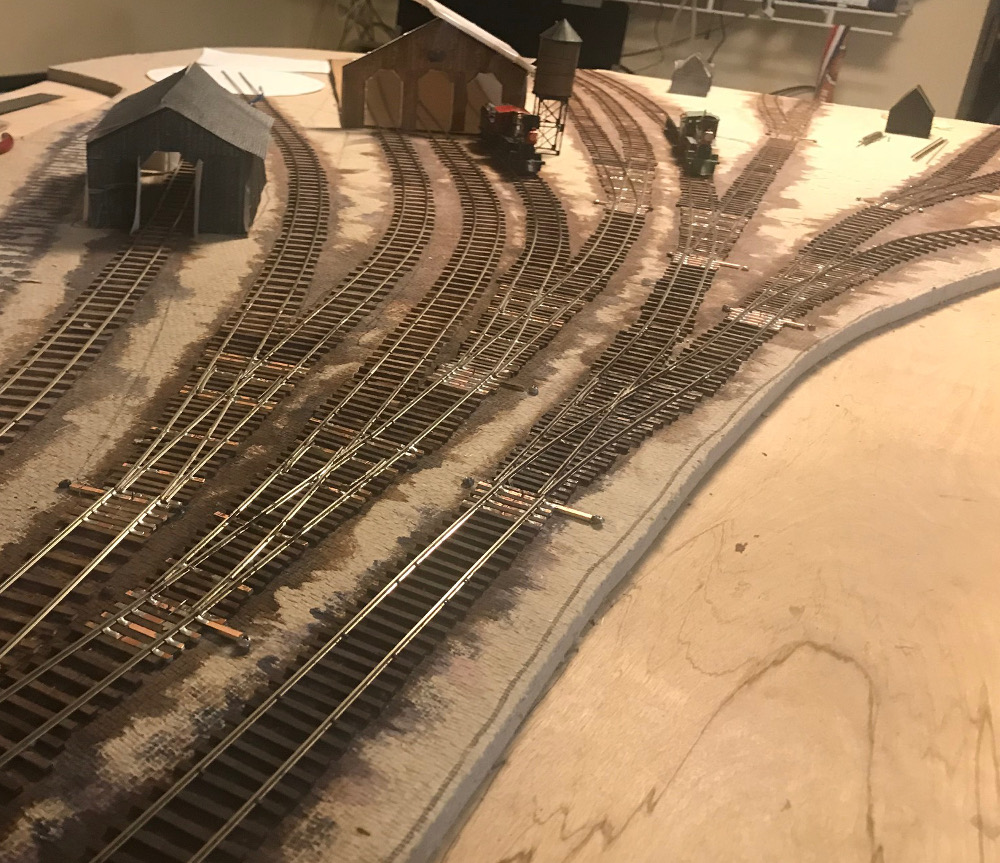
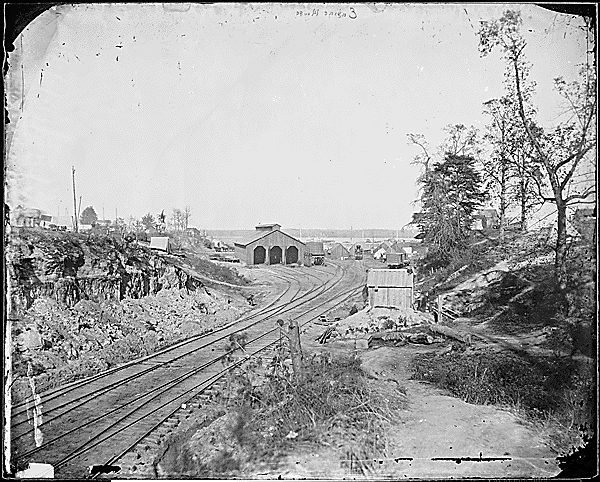
Modelling a Time and Place: My Proposed Model Railroad

February 25th, 2014

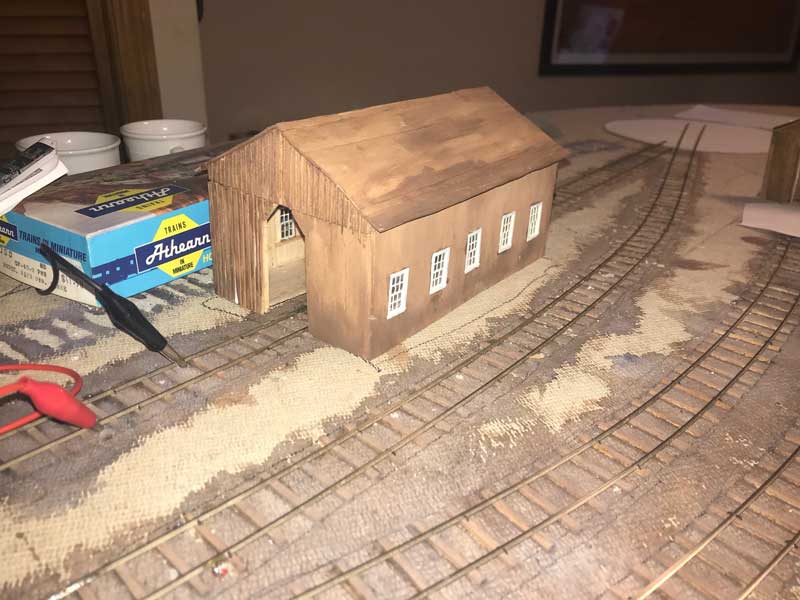
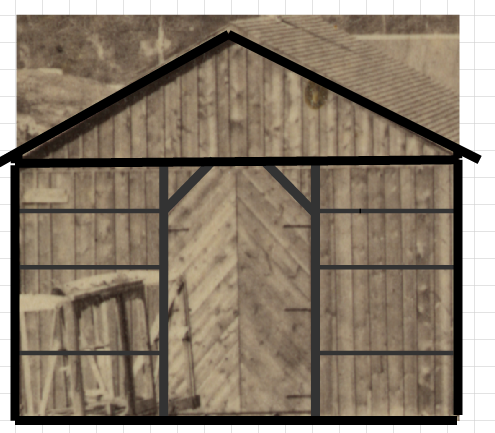
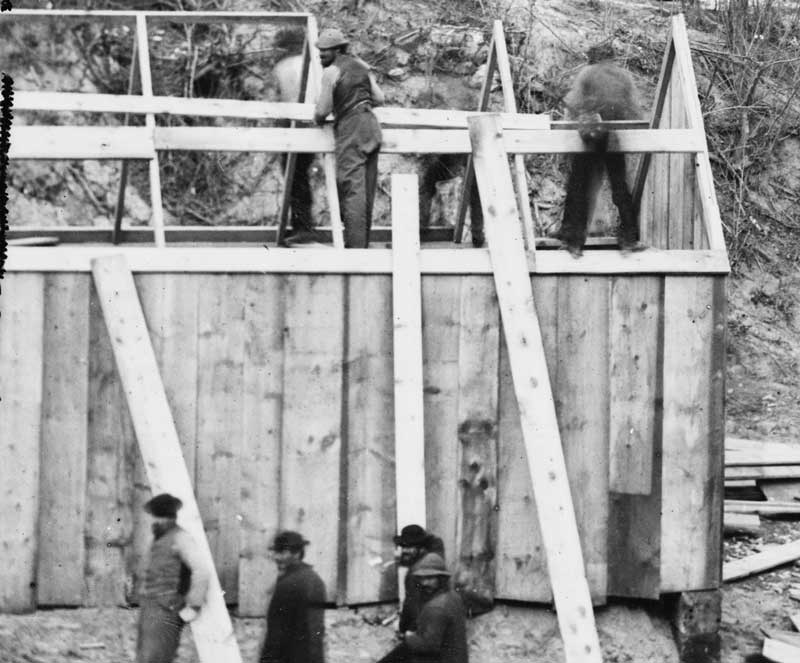
Most model railroaders eventually work towards modelling a certain date and time. In some cases, the plan is to tell a bit of a story. I guess I’m moving towards the extreme end of things in my City Point model railroad planning.

I was originaly thinking of modeling early December, 1864, when the Sixth Corp infantry returned from the Shennandoah Valley through City Point. This was to provide a viable reason to model a significant number of infantry using the port facilities.

However, after some recent digging, I think I have come up with a much more interesting timeframe.

In March there was heightened quartermaster activities related to preparations for a major campaign. On March 27th and March 28th, 1865, a lot was also going on at Army Headquarters.
President Lincoln and family was in port aboard the River Queen, taking almost daily trips to see points of interest.
Sherman arrived late in the afternoon of the 27th, leaving around noon on the 28th aboard the Bat, a captured blockade runner.
Sheridan arrived late at night of the 27th.
Admiral Porter was also present.
There were several meetings among these men during the late afternoon and evening of the 27th and also the next morning.

Up through the 28th, the 114th Pennsylvannia Zouves were on provost duty at City Point. The 114th Pennsylvannia had one of the best bands in the Army of the Potomac and it was known to serenade General Grant several times a week while on provost duty. They were still uniformed in Zouve attire, even at this late date in the war.

Also…
Several thousand prisoners were captured at Fort Stedman on the 25th – I don’t yet have information on transportation dates, but they were almost certainly shipped to prisoner of war camps through City Point, shortly after that battle.

Newly recruited units were arriving in this general timeframe to reinforce the armies for the upcoming spring campaign. Because of the great need for troops during this period of the war, the Union armies didn’t wait for new regiments to completely get recruited, but would often send incomplete regiments to the front, following later on with remaining companies. An example of this is the 18th New Hampshire, which had 6 companies sent to City Point in September, followed later on by individual companies, as they were recruited. At first, the regiment was attached to the engineer brigade and helped build the City Point defenses. Later on, they did some service in the trenches. Company H arrived at City Point on March 30th. Company H was given weapons and rudimentary training on the 31st and joined the regiment in a firefight in the front lines the very next day. On April 3rd the 18th New Hampshire joined the army as they occupied the vacated Confederate trenches. They also participated in the pursuit of Lee’s army.

Sounds like a fascinating time and place to model, what do you all think?

regards,
Mike W.

Mimeo’s back in stock

February 24th, 2014

Will be picking up the latest batch of Mimeos from the PCB fabricator this week (probably tomorrow). No changes from last batch.

At this point, I think I have some stock of all the PCBs that I have made since I started on this retro computer hobby.

Send an email to:mike@willegal.net if you have any questions or interest.

Interesting Civil War Railroad Detail at City Point

February 9th, 2014

My model railroad page now has a bit of information about the use of super-elevated track during the Civil War. Check it out at http://www.willegal.net/railroad/citypoint/cprailroad.htm

I recently made contact with a potentially great source of information on the City Point and Army Line Railroad. The information he says he has, would greatly expand my knowledge and I would definitely share it on my website. Whether this person can find the time to help me, will be determined, but if he does comes through, it has the potential to be quite awesome.

Kit and PCB status update and a question

February 1st, 2014
  • Coming for VCF east – SWYFT card reproduction kits – special introductory price if you join my SWYFT Card soldering Workshop – $40, drop me an email to register. Part of the proceeds goes to help support MARCH. After VCF east, price goes to $50.
  • Mimeo’s – out of stock – expect to have new batch around end of February
  • Datanetics PCBs – 1 left – rerun timing TBD
  • Brain Boards – 9 left – Note that I’m going to try move the remaining Brain Board kits over the next few months. I might even list them on ebay, to clear them out. If you want one, time to get it, is now. A rerun is not likely to be in the “cards”. I have a vague idea for an enhanced firmware board that may or may not get traction someday in the future.
  • SUPERPROTO kits – 8 left – rerun TBD – these are slow sellers and I haven’t actually made any money on these. However, I find them useful for my own purposes, so I might do another run (someday).
  • ACI kits – plentiful (currently I’m running low on PROMs, but expect I’ll be able to find another batch without too much trouble)
  • PS/2 keyboard adapter kits – plentiful
  • A2 rev 0 – ample supply
  • SCELBI 8H – I have less than 10 8H board sets remaining. I’ll make extra SRAM PCBs, when needed. Front Panels are in limited supply (less than 15, I think). TTY boards are plentiful
  • Now for the question – should I call my Apple II rev 0 reproductions Mimeo IIs, even though they came first?

    reproduction SWYFT cards for the Apple IIe coming

    January 26th, 2014

    I plan on holding build your own SWYFT card workshop at VCF east in April

    http://www.vintage.org/2014/east/

    follow the sessions link to find information.

    If you don’t know what a SWYFT card is. Check out this link.
    http://willegal.net/superproto/index.php?title=Swyft_Card

    regards,
    Mike Willegal

    Apple II Hedlock Fastener Repair

    January 18th, 2014

    The “Hedlock” connector on an Apple II is the fastener that holds the lid of the case to the case. It is similar to a 3M Dual Lock reclosable fastener. On the Apple II, it is attached to the enclosure and lid with double sided tape. Over time, the adhesive loses it’s effectiveness and the Hedlock connector comes loose from either the lid or the base of the computer’s enclosure.

    Here is an example where the tape stayed with lid, but the fastener came loose.

    Delaminated Hedlock Fastener

    Delaminated Hedlock Fastener

    I used to use contact cement to reattach the fastener to the tape, but I found over time that the contact cement is less than an ideal solution. I think I found a better solution using the tape found in auto part stores that is intended to reattach loose trim pieces. This 1/2″ wide double sided tape has an extremely strong, long lasting adhesive on both sides, so I expect this solution to be an improvement over the contact cement approach.

    hedlock-newtape

    Before attaching this new tape, you should remove the old tape and adhesive. This is, by far, the most difficult part of this job.

    In this example the old tape, which was attached to the lid, simply pealed off.

    Old Tape Removed From Top

    Old Tape Removed From Top

    The adhesive remaining on the Hedlock fastener was another matter. The bond is very strong, and in this case I eventually resorted to using a X-acto knife with a chisel blade to remove it. I left a few nicks in the surface, but since this is covered up with the new tape, I figured it wasn’t the end of the world. In a previous case, I managed to do it by rubbing with my thumb, but I ended up with a large blister on my thumb. I was temped to try a solvent like Goo Gone, but didn’t want to risk damaging the fastener. Here is the back of the fastener with the adhesive removed.

    Old Glue Removed From Hedlock Fastener

    Old Glue Removed From Hedlock Fastener

    Before reattaching the fastener, I cleaned up this area of the lid with Isopropyl Alcohol.

    Next I pealed back a strip of the new tape and stuck it to the fastener and cut the tape off from the roll.

    New Tape Applied to Hedlock Fastener

    New Tape Applied to Hedlock Fastener

    Then I took a sharp scissors and trimmed the ends of the tape to match the curve of the ends of the fastener.

    New Tape Applied to Fastener and Trimmed

    New Tape Applied to Fastener and Trimmed

    The last steps are to remove protective backing from the adhesive tape and carefully press the fastener back in place.

    Hedlock Replaced

    Hedlock Replaced

    I don’t know if it makes a difference, but I would wait a day before putting any stress on the reattached fastener.